How can patient data integration in the ICU improve patient safety?
In critical care units, each patient generates up to 2,000 clinical data points per day, compared with only about one hundred in conventional hospital wards.
This massive amount of information, scattered across different hospital information systems, represents a major challenge for healthcare professionals and clinical staff. In this article, we explain how effective patient data collection can transform the quality of treatment in the ICU and ensure optimal care for critically ill patients.
Patient Data Integration: A Vital Issue for Intensive Care
The consolidation of medical data in the ICU consists of centralising and synchronising information from multiple sources: medical devices, the patient record, laboratory results, prescriptions, and real-time monitoring.
This approach enables care teams to instantly access a global and coherent view of a patient’s clinical condition, facilitating decision-making and improving patient safety.
Challenges of Data Integration in Intensive Care Units
An Ultra-Complex Medical Environment
Intensive care units in France have unique characteristics that complicate data consolidation. The care team—including physicians, nurses, and clinical staff—must simultaneously process information from multiple sources: monitoring equipment, medical devices, information systems, laboratories, and hospital imaging systems.
This complex environment generates several major issues affecting the quality of care:
- Redundant data entry, sometimes repeated up to 7 times, depending on the department
- Incomplete or inaccessible patient records at critical moments
- Increased administrative workload for staff
- Siloed information systems are unable to communicate with one another
Impact on the Quality of Patient Care
The fragmentation of health information directly impacts the management of critically ill patients. The consequences affect several aspects of work in healthcare facilities:
Patient safety:
Lack of integrated information can lead to treatment errors, delayed decisions, or compromised monitoring during a patient’s stay.
Care efficiency:
Response times increase, coordination between healthcare professionals becomes more difficult, and gaining a global understanding of the patient’s clinical condition becomes more complex for staff.
Unit organisation:
Nurses and caregivers spend valuable time searching for and manually entering information instead of dedicating it to direct patient care.
Integration Solutions: Toward a Centralised Approach to Patient Data
Centralising and Structuring Medical Information
An effective data integration solution must provide a comprehensive approach to patient data management. The objective is to create a unified system capable of:
Centralising data from multiple sources: monitoring systems, prescriptions, patient records, laboratory results, and imaging
Structuring information by physiological system for coherent clinical interpretation
Ensuring interoperability with medical devices through advanced technical standards
Enabling real-time information sharing among staff
This centralisation allows healthcare professionals to instantly access the complete patient history while significantly reducing redundant tasks in daily practice.
Improving Continuity of Care
Patient data integration is particularly valuable during critical moments: admission, inter-department transfers, and staff shift changes.
With an integrated solution, every healthcare professional receives accurate and up-to-date patient information, facilitating collaborative work.
This continuity results in:
- Immediate access to the patient’s complete history
- Reduced information loss during transfers
- Improved traceability of medical actions
- Easier multidisciplinary coordination to effectively manage each case
Concrete Benefits for Healthcare Institutions
Clinical and Safety Impact
Centralising ICU patient data generates measurable therapeutic benefits for healthcare institutions in France. A recent study highlights several significant results:
Reduction in adverse events:
Fewer medical errors thanks to complete and accessible information.
Early detection of clinical deterioration:
Continuous monitoring and automated alerts enable rapid identification of changes in a patient’s condition.
Improved medical decision-making:
Real-time access to all clinical data supports informed and precise therapeutic choices.
Organisational and Economic Optimization
Beyond clinical benefits, data integration transforms the organization of critical care units and resource management.
Operational efficiency:
Shorter average length of stay thanks to optimized care management and better coordination of treatments.
Financial optimization:
Improved medical coding and optimized hospital billing.
Resource management:
Smoother staff transitions, optimal bed allocation, and efficient prioritization of treatments based on patient condition—leading to significant cost savings.
Diane: An Integration Solution Designed for Critical Care
A Comprehensive Platform for the ICU
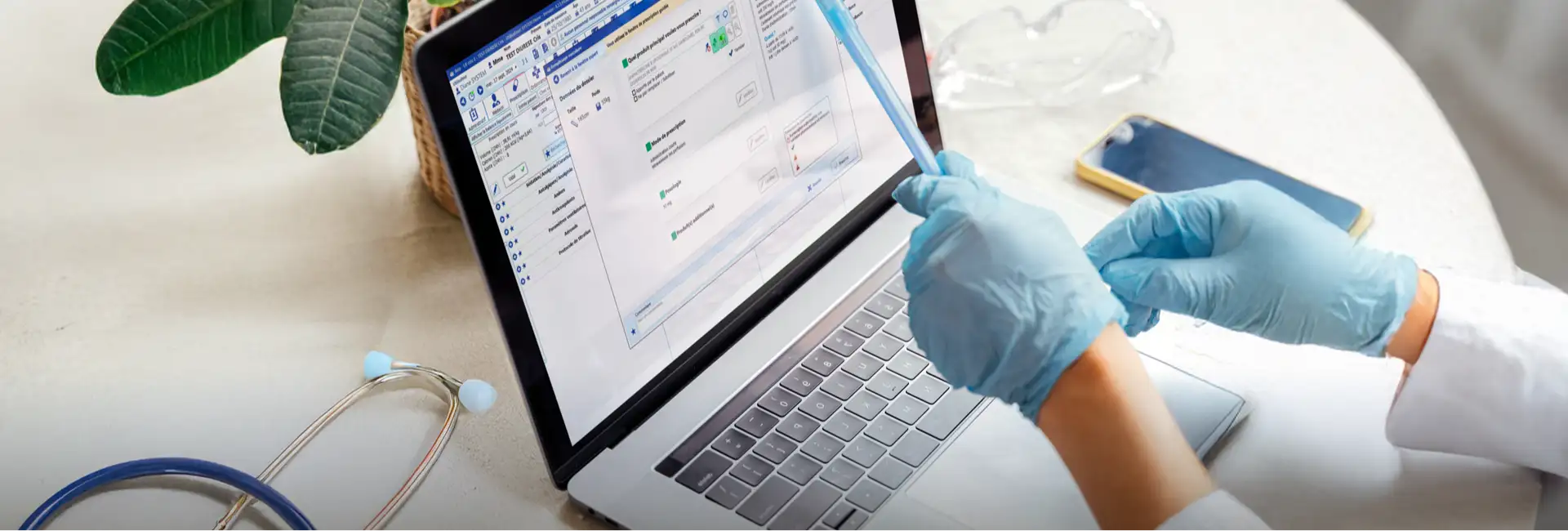
To address the challenges of consolidating critical patient information, the Diane solution developed by Bow Medical provides a system tailored to the specific needs of intensive care units.
This comprehensive platform allows hospitals to:
- Connect all medical devices and information systems
- Integrate clinical data using a coherent medical logic
- Facilitate the daily work of healthcare professionals
- Ensure patient safety and quality of care
The Diane software also offers advanced analytics and reporting features to evaluate unit performance, giving healthcare institutions a competitive advantage in their organisation.
Interoperability and Technical Innovation
Diane relies on the most advanced interoperability standards to ensure seamless integration with the existing technological ecosystem.
This approach allows healthcare facilities to maximise their current investments while benefiting from a high-performance software solution developed by a specialised French company.
The innovation lies in the ability to transform technical data into actionable clinical information, enabling healthcare professionals to focus on their core mission: delivering the best possible care to patients.
This approach also helps quickly identify critical situations and propose appropriate measures for each case.
The Purpose of Interoperability
The purpose of interoperability is to ensure that different systems, devices, and software applications can communicate, exchange, and use patient data efficiently and securely, improving care coordination and clinical decision-making.
Implementation and Adaptation to Hospital Needs
Tailored Deployment for Each Healthcare Institution
Every healthcare institution has unique organisational characteristics. Implementing a data synchronisation solution such as Diane requires a customised approach to adapt to the specific constraints and needs of each medical unit.
This process includes:
Needs analysis:
Comprehensive assessment of the existing organisation and identification of improvement opportunities.
Staff training:
Supporting teams to facilitate the adoption of the new tool.
Progressive integration:
Step-by-step deployment to minimise disruption to daily activities.
Monitoring and optimisation:
Continuous performance monitoring and adjustments based on user feedback.
Results and Return on Investment
Healthcare institutions that have implemented digital solutions report significant improvements.
For example, a French hospital observed:
- 30% reduction in time spent searching for information
- 25% increase in healthcare staff satisfaction
These results demonstrate that investing in patient data integration is an effective way to simultaneously improve quality of care, operational efficiency, and staff satisfaction.
You now understand how patient data integration in the ICU can transform the quality of critical care.
This technological approach is a key lever for improving patient safety, care team efficiency, and continuity of care across hospital departments.
Data integration is no longer optional but a necessity for modern intensive care units. By choosing a solution such as Diane, your institution can take a decisive step toward excellence in critical care and provide patients with optimal medical support.
Is your ICU ready for this digital transformation?
Discover how the Diane solution can integrate into your technological environment and concretely improve patient care.
Contact our teams today for a personalised audit and tailored demonstration of our interoperability capabilities. Together, let’s work to guarantee the highest possible quality of care.
To further improve the management and monitoring of medical devices in intensive care, it is essential to consult reliable resources such as “Optimising the Monitoring of Medical Devices.”
About Bow Medical
Bow Medical is a leading European company specializing in software for critical care.
For over 20 years, Bow Medical has been designing the Diane software platform to improve and secure critical care in anaesthesia and intensive care.
The provision of software solutions for critical care management is a specific segment of the patient record that requires strong industry expertise.
Its digitisation brings added value focused on performance, reliability, security, and time optimisation.
More than 450 hospitals and clinics use our software daily, with 5 million anaesthesia consultations per year performed in Diane Poa (approximately 70% of computerised consultations in France).
Over 3,000 operating rooms are equipped with Diane Aims, and more than 1,200 intensive care beds facilitate patient care through Diane Icu.