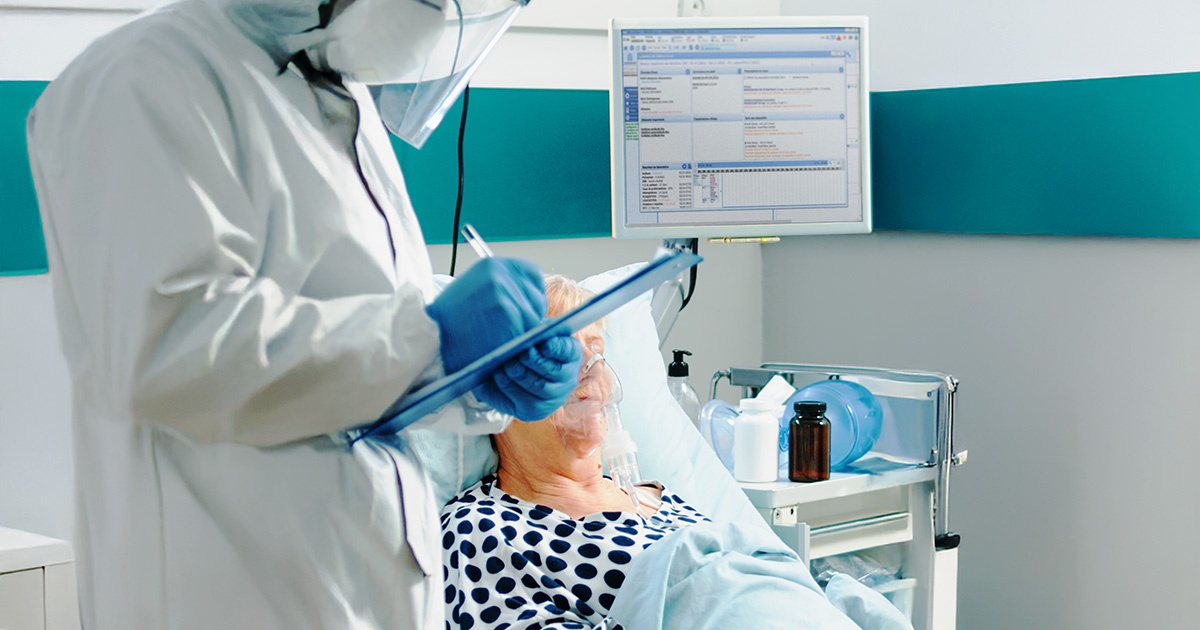
Are you wondering how to improve the interoperability of your ICU software within your healthcare facility? In intensive care units in France, fragmented Information Systems (IS) lead to critical data loss and slow down patient care within hospitals. As experts in interoperability solutions for healthcare professionals, we know that this issue directly impacts quality of care and patient safety.
In this article, we explain how to effectively connect your medical devices and optimize patient data management in intensive care medicine.
What Is ICU Software Interoperability?
Information continuity in ICU software consists of enabling communication between all information systems, medical devices, and applications used in intensive care units. This comprehensive solution centralizes patient data, facilitates the sharing of clinical information between care teams, and improves patient care.
It is an essential tool to ensure continuity of care and deliver optimal outcomes. Let us now explore the challenges and practical solutions available for your department.
The Challenges of Interoperability in Intensive Care
Exceptional Technological Density
Intensive care units now concentrate cutting-edge medical technology. Each continuously monitored bed includes on average 12 to 15 different medical devices, often from multiple manufacturers, with some devices separated by more than ten years in age.
This technological density generates a massive flow of data every day: up to 2,000 values per patient per day.
This technical complexity is accompanied by significant variability in data formats. Information circulates as text, numbers, waveforms, and images, creating an environment where the requirement for zero tolerance for errors becomes a constant challenge for healthcare professionals.
In this context, effectively connecting each device becomes essential to simplify the work of care teams.
Fragmented Information Systems
Despite sophisticated equipment, fragmented systems remain a major barrier to continuity of care. This situation is characterized by:
- Lack of communication between clinical software, the electronic patient record, and medical devices
- Proprietary formats requiring manual transformations
- Multiplication of non-harmonized data repositories
In practice, this fragmentation leads to critical information loss, repeated data entry, and increased cognitive workload for healthcare staff. Time spent searching for and entering medical information directly impacts the time dedicated to patient care.
This situation creates a strong need for innovation to optimize resource use and improve patient management.
Diane Icu Software – Interoperability
The Diane Solution: A Comprehensive Interoperability Approach
A Unified Architecture for Patient Data
To address these challenges, Bow Medical has developed Diane, an interconnection solution specifically designed for the needs of ICU departments.
This platform enables the integration of heterogeneous data sources and transforms them into actionable information for medical teams. The objective is to provide continuous access to health data in order to improve patient outcomes.
Diane makes it possible to:
- Significantly reduce the need for manual mapping
- Organize data by physiological systems
- Ensure long-term access to patient data, regardless of the device manufacturer
- Easily integrate new biomedical devices into the existing environment
Centralized Clinical Terminologies
Interoperability goes beyond simple technical connectivity. It also requires a consistent terminological structure for health data.
The solution integrates a centralized database that enables:
- Harmonization of prescription references, care plans, and vital parameters
- Simplified updates with official French services (ANS)
- Elimination of duplicates and semantic conflicts between systems
- Consistency of data shared across different clinical use cases
Ergonomics Designed for Clinical Use
The main objective is to make the technology invisible to the user. This caregiver-centered approach enables:
- Transmission of relevant information to each professional role
- Contextual access to data at the right time and for the right person
- Smooth usability even in critical situations
- Real-time monitoring of vital parameters to support optimal diagnostic decision-making
- Implementation of a unified patient record accessible from all workstations
Concrete Benefits for Your Healthcare Facility
Improved Quality of Care
Implementing an interoperability solution such as Diane generates tangible clinical benefits. This application significantly improves the daily practice of healthcare staff:
- Significant reduction in errors related to information loss
- Faster clinical decision-making thanks to improved data access
- Early detection of patient deterioration
- Improved communication between ICU units and anaesthesia departments
- Enhanced patient safety through continuous and automated monitoring
Economic Optimization
From an economic perspective, results are also measurable:
- Reduction in average length of stay
- Valuable time savings for healthcare teams
- Improved therapeutic coding through better traceability
Organizational Improvement
The organizational impact is felt in the daily work of professionals. This integration project transforms healthcare management:
- Smoother transitions between departments
- Better interdisciplinary coordination between stakeholders
- Significant reduction of redundant data entry tasks
- Optimization of patient information search processes
- Improved information sharing during team handovers
Interoperability: A Critical Requirement for Intensive Care
In the highly demanding context of intensive care units, technological isolation is no longer a viable option. Interoperability has become an essential clinical, organizational, and economic requirement.
Bow Medical demonstrates that it is possible to intelligently connect technologies to give healthcare teams more time for therapeutic care while improving patient safety. This open, ergonomic, and resilient approach transforms technological promise into operational clinical reality.
You now know how to optimize ICU software interoperability in your healthcare facility. By effectively connecting your hospital information systems, you will improve treatment quality and patient safety in intensive care units. This approach represents the best way to leverage technology in support of critical care.
About Bow Medical
Bow Medical develops the Diane software platform. Used by more than 450 hospitals and clinics, it handles 5 million anaesthesia consultations a year, accounting for 70 per cent of computerised consultations in France. More than 3,000 operating theatres and 1,200 intensive care beds use Diane for patient management.